The moment that still sticks with me is checking my bank balance after a “good” month and realizing why most people stay broke starts exactly here. Salary came in. Rent paid. A few dinners out. A phone upgrade on EMI. Some random online shopping. Balance: basically zero. Again.
Nothing dramatic went wrong. No emergency. No big mistake. And that’s the scary part.
YOU CAN ALSO READ:
Budgeting Made Simple: The 50-30-20 Rule with real exampleMost people don’t stay broke because they’re lazy or unlucky. They stay broke because of a bunch of small, boring patterns that quietly eat every extra rupee before it ever gets a chance to grow.
“I earn okay, so why does it never stick?”
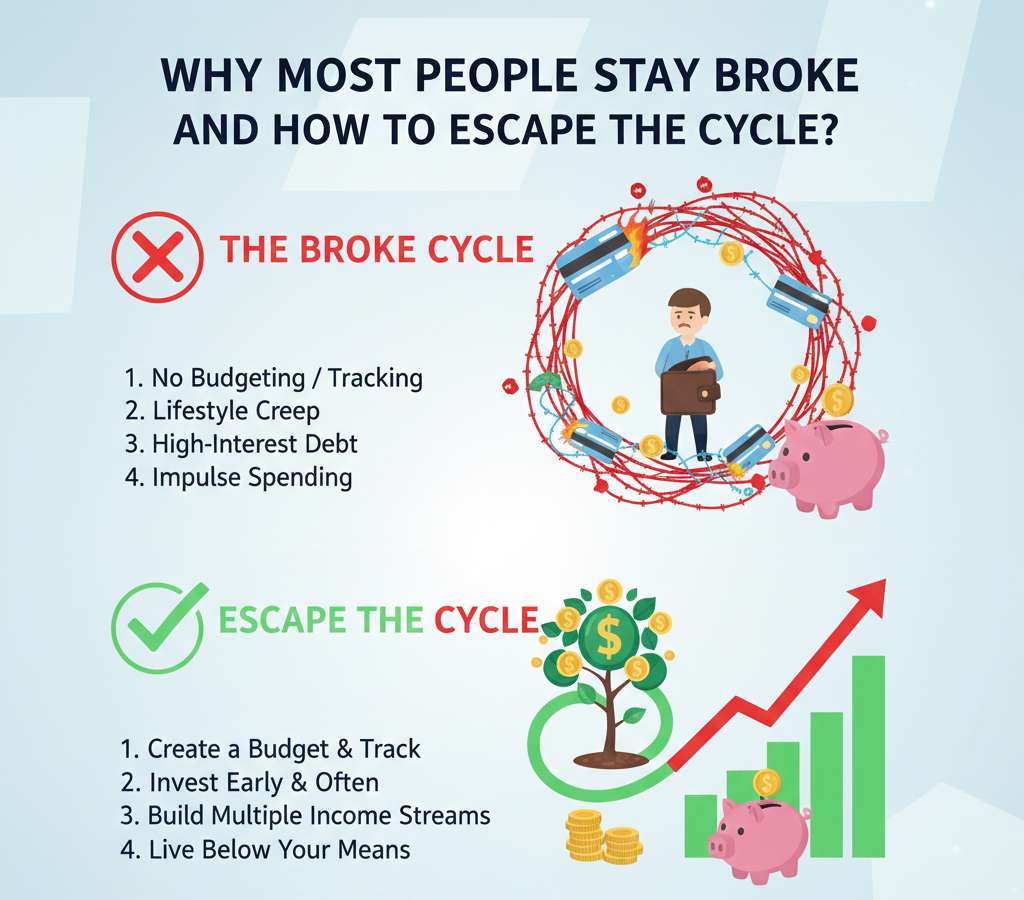
This is where most confusion starts. Income goes up, lifestyle quietly follows. A slightly better apartment. A nicer phone. More Swiggy orders. Suddenly the gap between “I earn” and “I save” is still tiny.
From what I’ve seen, people don’t consciously decide to spend more. It just happens:
- Salary increases → expenses expand
- Bonuses → treated as free money
- EMIs → normalized as “monthly expenses”
The money never piles up because it’s never allowed to sit still.
The real problem isn’t spending. It’s timing.
Here’s the mistake I made for years: saving whatever was left at the end of the month.
There was never anything left.
Bills, wants, and small “rewards” always came first. Saving was optional, so it got skipped. Over time, this trains your brain to see saving as a sacrifice instead of a default.
The actual consequence isn’t just low savings. It’s anxiety. You start avoiding bank apps. You delay investing because “next month will be better.” Next month never is.
Why online advice often doesn’t work in real life?
A lot of finance advice assumes perfect behavior:
- “Just invest regularly”
- “Cut unnecessary expenses”
- “Increase your income”
None of this is wrong. It’s just incomplete.
What’s missing is friction. Real life has temptations, social pressure, bad months, medical bills, and family obligations. If a plan only works when you’re disciplined 100% of the time, it won’t work long term.
Personally, I’m cautious about advice that ignores human behavior. Money isn’t just math. It’s habits plus emotion.
The comfort trap nobody talks about
This one is uncomfortable, but important.
Many people stay broke because being slightly stressed but familiar feels safer than changing how they live. Tight budget, no savings, but predictable. Trying to save or invest feels risky because it forces short-term discomfort.
YOU CAN ALSO READ:
How to Build Multiple Income Streams from ScratchSo people delay:
- “I’ll start investing when I earn more”
- “I’ll save after this phase”
- “I need to enjoy life a bit first”
Years pass like this. Not because they didn’t know better, but because comfort is addictive.
The biggest mistake I see again and again: Why most people stay broke
Confusing movement with progress.
People feel productive because they:
- Read finance threads
- Watch investment videos
- Discuss stocks and crypto
- Open multiple apps
But nothing changes in their bank balance.
Learning feels like progress, but money only changes when behavior changes. Until then, it’s just mental entertainment.
Wealth builds slower than people expect (and that’s normal)
One harsh lesson: this stuff takes time. Not weeks. Not months. Years.
In my experience, it usually takes:
- 3–6 months to even stabilize savings
- 1–2 years to feel “not stressed”
- Longer to feel genuinely secure
Anyone promising fast results is skipping reality. Slow progress isn’t failure. It’s the process.
Escaping the cycle isn’t dramatic
There’s no moment where everything flips. It’s quieter than that.
What actually helps is boring consistency:
- Fewer decisions
- More automation
- Less reliance on willpower
The goal isn’t to become obsessed with money. It’s to stop money from constantly demanding your attention.
Things worth checking if you feel stuck
Not instructions. Just things to think about:
- Does your lifestyle automatically rise every time income does?
- Do you save first or only if something is left?
- How many expenses feel “small” but happen every week?
- Are EMIs making future income feel already spent?
- Do you measure progress yearly, not monthly?
Practical considerations people underestimate
- Mental bandwidth matters. Too many accounts and apps create confusion.
- Stability beats optimization. A simple plan you stick to beats a perfect one you abandon.
- Cash flow matters more early on than returns.
- Stress reduction is a valid financial goal.
What to be careful about
- Comparing yourself to people online (you don’t see their debts)
- Taking risks you don’t fully understand just to “catch up”
- Treating investing like entertainment
- Ignoring emergency buffers while chasing growth
What usually matters more than people think
- Consistency over intensity
- Behavior over knowledge
- Time over timing
- Peace of mind over bragging rights
Staying broke is rarely about one bad decision. It’s about repeating small ones for years. Escaping it doesn’t require genius. It requires noticing patterns you’ve normalized and slowly breaking them.
YOU CAN ALSO READ:
10 Silent Money Mistakes Destroying Your Future WealthDisclaimer: Please consult your financial advisor before taking any financial decision.
Explore more categories:
https://bylogic.in/category/investing-and-wealth-building/
https://bylogic.in/category/loans-and-credit/
https://bylogic.in/category/digital-payments-banking-and-personal-finance-tools/