The first “multiple income streams” I tried nearly broke my motivation, not my bank balance.
I stacked three ideas at once. Freelancing at night. A small investing experiment. A half-baked online project I barely understood. I wasn’t lazy. I was scattered. Money came in randomly, effort went out constantly, and I had no idea what was actually working.
YOU CAN ALSO READ:
Money Basics Before 30 Which People Learn the Hard WayThat confusion is where most people start — and where many quietly stop.
Why “multiple income streams” feels easier than it actually is
On paper, it sounds logical. One salary is risky. More sources equals safety.
In real life, what happens first is:
- mental overload
- inconsistent cash flow
- a lot of unpaid learning time
I didn’t realize that diversifying income before stabilizing one stream just multiplies stress, not security.
Most advice skips this part.
The mistake I see over and over (and made myself)
People confuse number of income streams with quality of income streams.
They chase:
- five side hustles making almost nothing
- platforms they don’t control
- ideas that only work if you’re constantly present
The actual consequence isn’t just low income. It’s:
- money stuck in tools, courses, or accounts that never compound
- months of effort with nothing predictable to show for it
- constant anxiety because nothing feels solid
That feeling of “I’m busy but not moving” is brutal.
What finally started working for me
Things changed when I stopped asking “How many streams can I build?” and started asking “What kind of income is this, really?”
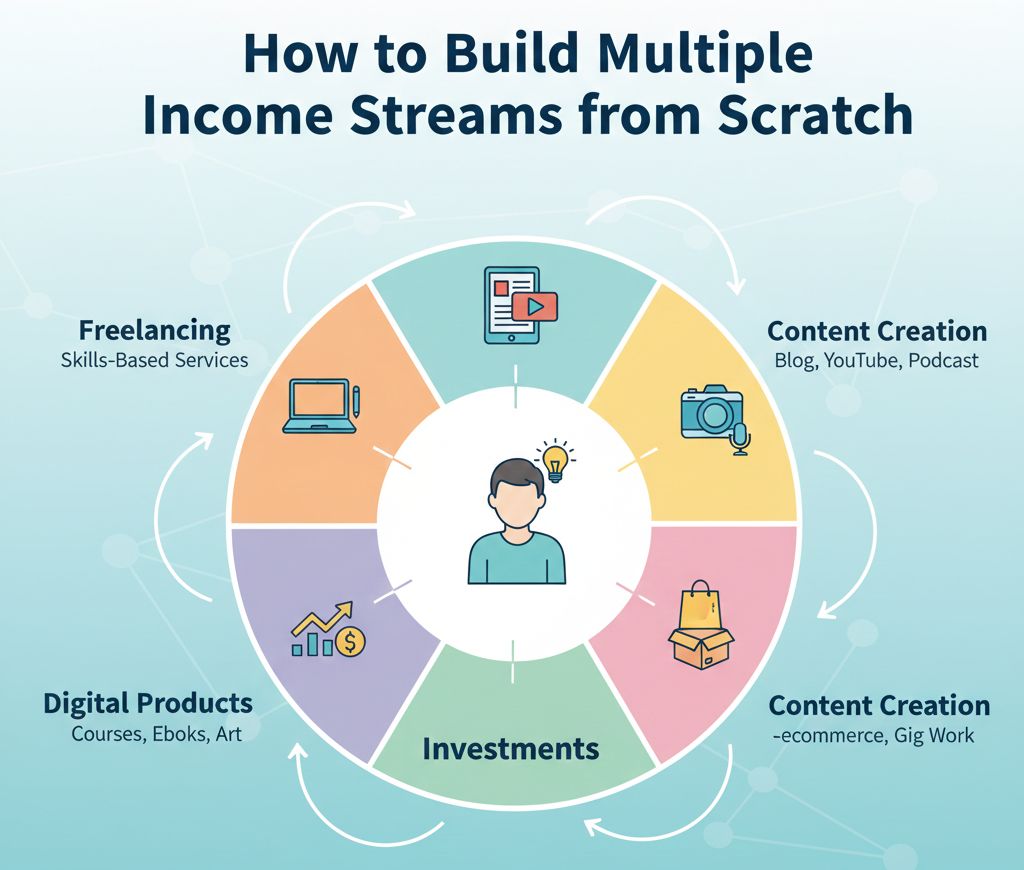
From what I’ve seen, most income falls into three buckets:
- Earned (time-for-money)
- Leveraged (systems or assets doing part of the work)
- Delayed (money that grows slowly but quietly)
Trying to build all three at once is where people mess up.
I learned the hard way that you usually build them in sequence, not parallel.
A realistic example (not a highlight reel)
One stream I relied on heavily was skill-based work. It paid bills, but the moment I stopped, income stopped.
YOU CAN ALSO READ:
10 Silent Money Mistakes Destroying Your Future WealthI assumed investing would “fix that.” It didn’t. At least not fast.
What actually helped was using earned income to buy time:
- fewer financial emergencies
- room to experiment without panic
- patience to let slower streams mature
This process took months, not weeks. And that’s being generous.
The part nobody likes to admit
Multiple income streams don’t feel stable in the beginning.
They feel:
- fragile
- uneven
- boring when done right
The exciting ones are usually the least reliable.
Personally, I’m cautious about anything that promises speed, automation, or “passive” results upfront. In my experience, real compounding shows up after consistency, not before it.
What usually matters more than people think
Not motivation. Not intelligence. Not even ideas.
It’s:
- how long you can stick with something without feedback
- whether income depends on you or a structure
- how quickly mistakes cost you real money
Most people quit right before clarity shows up.
Things worth checking before you add “one more stream”: Multiple income streams
Not steps. Just realities to think through:
- Does this depend on your daily attention, or can it survive a bad month?
- Are you building something transferable, or platform-dependent?
- How long can you afford for this to pay nothing?
- What breaks first if your main income dips?
- Are you diversifying income — or just diversifying effort?
Be especially careful with anything that locks money without flexibility.
A grounded way to think about it
Multiple income streams aren’t about hustle.
They’re about reducing single-point failure over time.
That takes patience, not pressure.
And clarity, not noise.
There’s no universal formula here. What works depends heavily on your risk tolerance, cash buffer, and temperament.
YOU CAN ALSO READ:
Index funds vs active funds: 10-year return realityPlease consult your financial advisor before taking any financial decision.
Explore more categories:
https://bylogic.in/category/insurance-life-and-health/
https://bylogic.in/category/retirement-planning/
https://bylogic.in/category/digital-payments-banking-and-personal-finance-tools/