
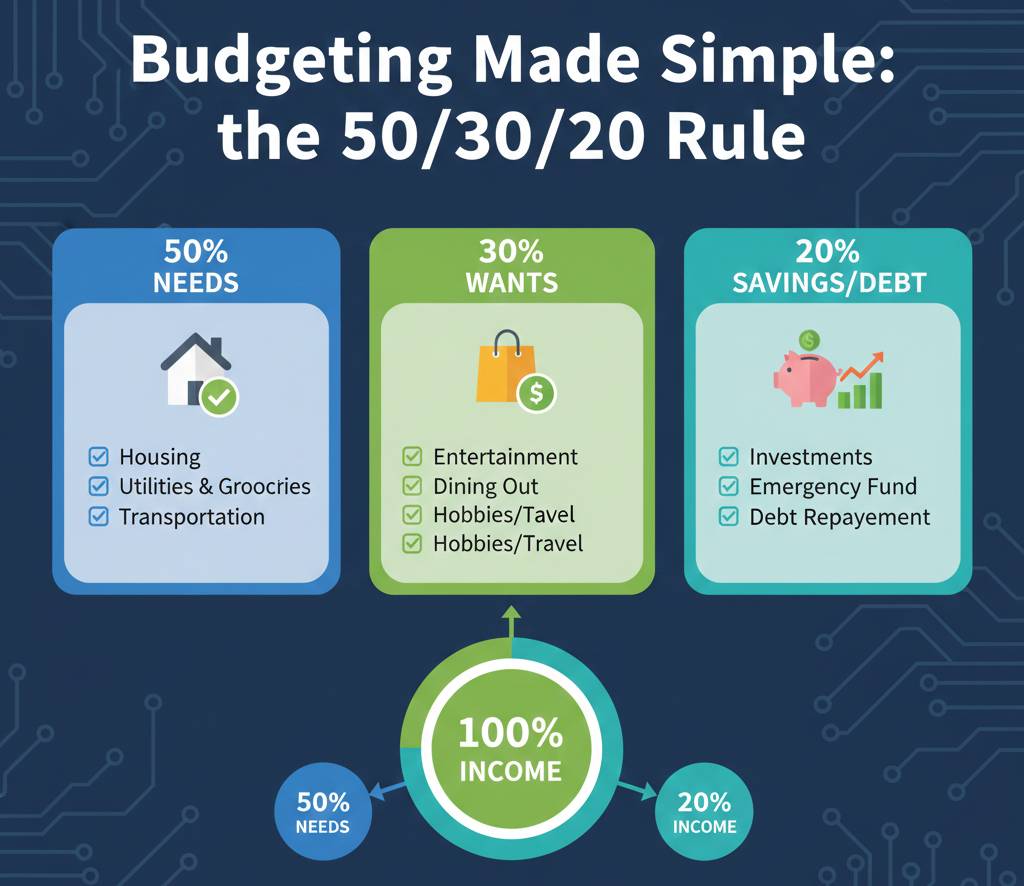
I didn’t set out to master personal finance. I just wanted my money to stop surprising me every month. That’s where Budgeting made simple finally clicked. Instead of tracking every rupee or feeling guilty about spending, I started focusing on clear boundaries between needs, wants, and savings. The idea isn’t perfection; it’s visibility.
Once money has a rough job assigned, decisions get easier and anxiety drops. You still adjust, you still mess up some months, but you’re no longer guessing. Most budgets fail because they assume you’ll behave like a spreadsheet.
YOU CAN ALSO READ:
How to Build Multiple Income Streams from ScratchYou won’t.
What actually happens is this:
- Fixed expenses slowly creep up.
- “Just once” spending becomes a habit.
- Whatever’s left at the end of the month decides your savings. Which is usually nothing.
I’ve seen people blame low income for this. Sometimes that’s true. Often it’s not. The real issue is money decisions without boundaries.
What the 50-30-20 rule really tries to fix: Budgeting made simple
At its core, the 50-30-20 rule isn’t about discipline. It’s about guardrails.
- 50% Needs – rent, groceries, EMIs, utilities. Stuff that keeps life running.
- 30% Wants – eating out, gadgets, subscriptions, trips.
- 20% Savings – emergency fund, investments, long-term goals.
These percentages aren’t magic, The separation is.
The moment I stopped mixing “must pay” and “nice to have,” decisions got easier. Not painless — just clearer.
A real example (numbers always expose the truth)
Say your monthly take-home is ₹60,000.
On paper:
- ₹30,000 → needs
- ₹18,000 → wants
- ₹12,000 → savings
Now here’s where reality hits.
Rent is ₹18,000. Groceries + bills are another ₹12,000. You’re already at ₹30,000. Fine.
But then:
- Food delivery doesn’t feel like a “want”
- Weekend plans blur into “mental health”
- Subscriptions are “small amounts anyway”
By mid-month, wants quietly eat into savings. The rule didn’t fail, the labels did.
The biggest mistake people make with this rule
Treating it like a law instead of a lens.
I’ve seen people force 50-30-20 even when:
YOU CAN ALSO READ:
10 Silent Money Mistakes Destroying Your Future Wealth- Rent alone is 55–60%
- Income is irregular
- They’re aggressively paying off debt
That usually leads to guilt, not progress.
From what I’ve seen, the rule works best when you adjust the ratios but keep the structure.
60-25-15 still works.
70-20-10 can work temporarily.
What breaks things is letting everything float together.
Where this actually helps with wealth building
This rule doesn’t make you rich. It makes wealth-building predictable.
Once savings are carved out upfront:
- Emergency funds actually get built
- Investing becomes consistent, not emotional
- You stop “finding money” and start allocating money
The real benefit shows up after a few months, not weeks. That’s usually when anxiety drops and decisions stop feeling reactive.
Why finance nerds still respect this “simple” rule
Because complexity scales poorly.
You can layer advanced investing strategies later. But without a base system, even smart people leak money.
Personally, I don’t fully trust advice that jumps straight to asset allocation without asking how someone handles cash flow month to month. Garbage in, garbage out.
Things worth checking before you use this
- Whether your needs are genuinely needs, not comfort costs
- How stable your income really is over 6–12 months
- Whether debt payments are hiding inside “wants”
- How long it actually takes you to adjust spending habits (usually 2–3 months, not instantly)
Practical considerations people underestimate
- Fixed expenses are sticky. Cutting them takes time.
- Savings feel slow at first. That’s normal.
- Small leaks matter more than big splurges.
- Awareness beats optimization early on.
Be careful about turning this into a moral scorecard. It’s a framework, not a judgment.
What usually matters more than the exact percentages is consistency and honest categorization.
Budgeting isn’t about control. It’s about reducing surprises.
The 50-30-20 rule doesn’t solve money problems. It makes them visible that which is usually the first real win.
YOU CAN ALSO READ:
Why Most People Stay Broke and How to Escape the Cycle?Disclaimer: Above written content is just for educational purpose and may not work for some individuals. So, Please consult your financial advisor before taking any financial decision.
Explore more categories:
https://bylogic.in/category/investing-and-wealth-building/
https://bylogic.in/category/loans-and-credit/
https://bylogic.in/category/digital-payments-banking-and-personal-finance-tools/